
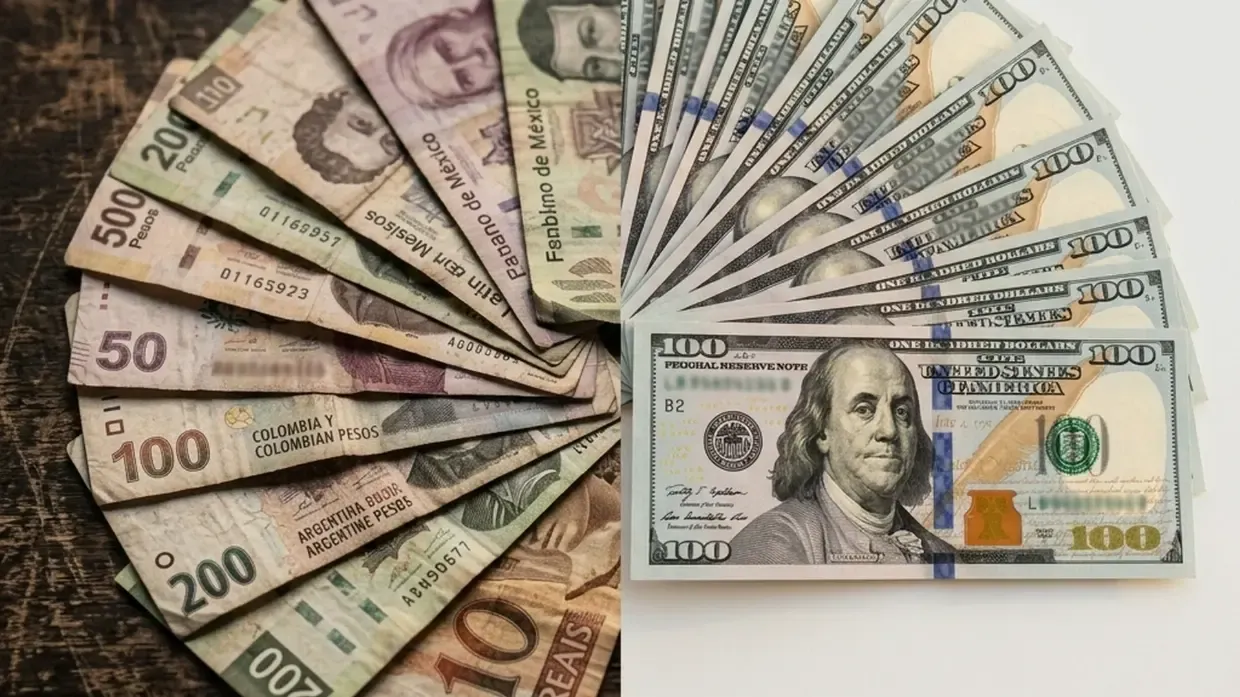
TLDR: Panama’s dollarized economy real estate investment case starts with one fact: the US dollar has been the country’s only circulating currency since 1904, over 120 years. The Panamanian Constitution prohibits the issuance of paper Balboa notes, meaning dollarization is not government policy that can be reversed by the next administration — it is constitutional law. Every real estate transaction, every rent payment, every resale proceeds from a Panama City property is denominated in USD. For North American investors, this eliminates the single risk that has destroyed wealth in Argentina, Mexico, Colombia, and most of Latin America: currency devaluation eating your returns before they reach your account.
Most foreign investors think about real estate risk in terms of title fraud, bad agents, or overpaying. Those risks are real and manageable. The risk that actually kills offshore returns, the one that barely gets mentioned in Panama marketing materials because it is not a problem here, is currency devaluation.
An investor who bought a Medellín apartment in 2019 at 7% gross yield watched the Colombian peso lose 30% of its value against the dollar over the following four years. The yield in pesos stayed the same; the yield in dollars, however, dropped to roughly 5%. A Monterrey investor who earned 8% gross in Mexican pesos from 2020 to 2024 lost a meaningful portion of those returns to peso depreciation every quarter. An Argentine investor who owned property denominated in pesos during the 2022–2023 period — when inflation exceeded 200% per year — earned rent that was worth progressively less each month.
Panama removes this problem entirely, and not by hedging it, or by offering dollar-indexed leases that still depend on local currency stability. Instead, Panama operates as a fully dollarized economy where the US dollar is the only circulating currency in everyday use.
In short, Panama dollarized economy real estate investment rests on a simple structural fact. Panama adopted the US dollar as its official currency in 1904, making it the oldest continuously dollarized economy in the Western Hemisphere. The Panamanian Constitution prohibits paper Balboa notes, locking dollarization at the constitutional level. Panama has no central bank and cannot print money or devalue its currency. All real estate transactions — purchase, rent, resale, repatriation — occur in USD with no conversion required. For US and Canadian investors, this eliminates foreign exchange risk entirely; for European investors, it creates a single USD exposure to manage rather than layered local-currency risk. Sources: Arosemena Noriega & Contreras [1], Limitless Legal [2], DoPanama [3].
Panama Dollarized Economy Real Estate Investment: What Investors Need to Know
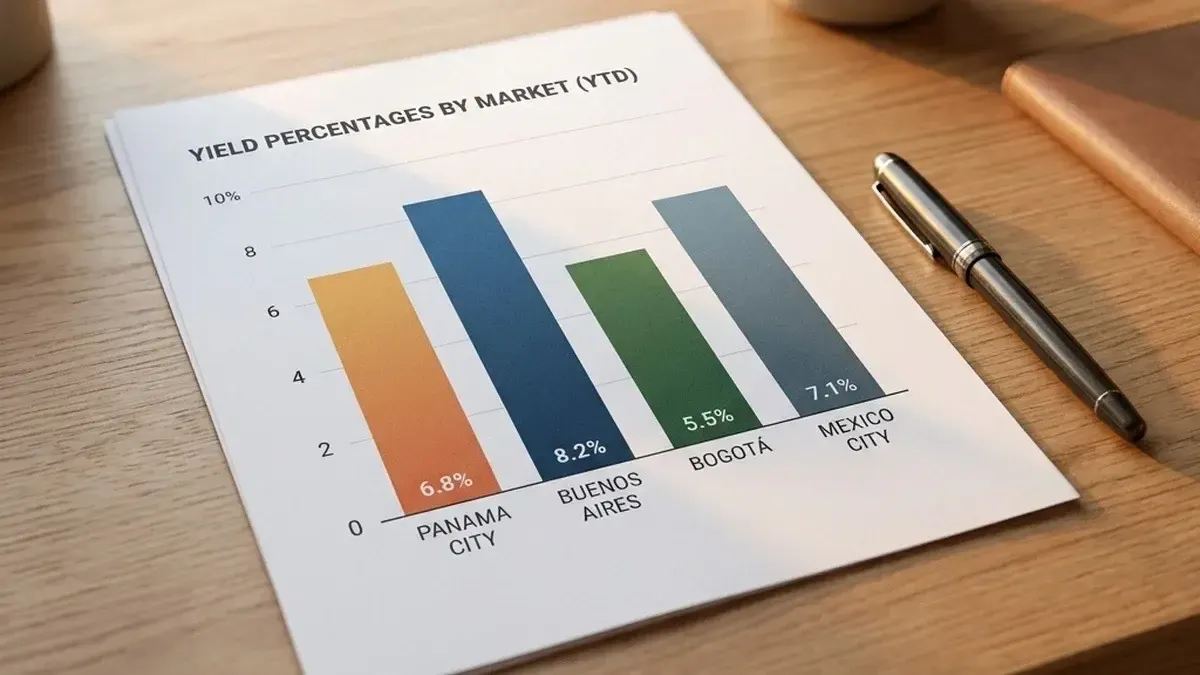
Panama’s monetary system is structured in a way that most investors who arrive from other Latin American markets are not immediately aware of. The dollar is not just accepted in Panama; it is the only circulating paper currency in the country.
120 Years of Dollarization, Locked Constitutionally
Panama adopted the US dollar in 1904, the year after its independence from Colombia. The original motivation was straightforward: the new country needed monetary credibility to attract the foreign capital required to build the Panama Canal. The Colombian peso had been unstable, and the dollar was the hardest currency in the hemisphere; Panama chose stability, per Arosemena Noriega & Contreras’s dollarization history [1].
What makes this structurally different from other countries that have chosen to peg their currency to the dollar is the constitutional lock. The Panamanian Constitution prohibits the issuance of paper Balboa notes. The Balboa exists as a unit of account and in coin form for small transactions, but there is no Balboa paper currency. As a result, there is no mechanism for Panama to inflate its way out of debt, devalue against the dollar, or unwind dollarization through a cabinet decision, per DoPanama’s currency system guide [3]. A change would require constitutional reform — a multi-year process with no current political support.
No Central Bank, No Monetary Policy Risk
In fact, Panama does not have a central bank. It cannot set interest rates, expand the money supply, or conduct quantitative easing. This is not a gap in the financial system; it is the design. The monetary policy decisions that affect Panama’s dollar supply are made in Washington, DC, not in Panama City. For investors, this means the local political environment cannot produce the monetary conditions that have destabilized Argentina, Venezuela, or Zimbabwe, per Limitless Legal’s dollarized economy investment guide [2].
What This Means for Every Stage of the Investment
In summary, at purchase: you wire USD, the transaction is documented in USD, and the transfer tax and closing costs are calculated in USD.
At the rental stage: leases in Panama City are denominated in USD, rent arrives in USD, HOA fees are denominated in USD, and property management fees are a percentage of USD rent. There is no conversion at any point in the income cycle.
At resale: the property is listed, negotiated, and sold in USD, and the proceeds transfer in USD. If you repatriate to a US account, the money moves without any currency conversion; if you hold it in a Panamanian bank account, it sits in USD.
For US and Canadian investors, this is a clean loop. For European investors, in contrast, there is a single USD/EUR or USD/GBP exposure to manage — one layer, not layered local currency risk stacked on top of a USD exposure.
How This Compares to What Investors Face Elsewhere in Latin America
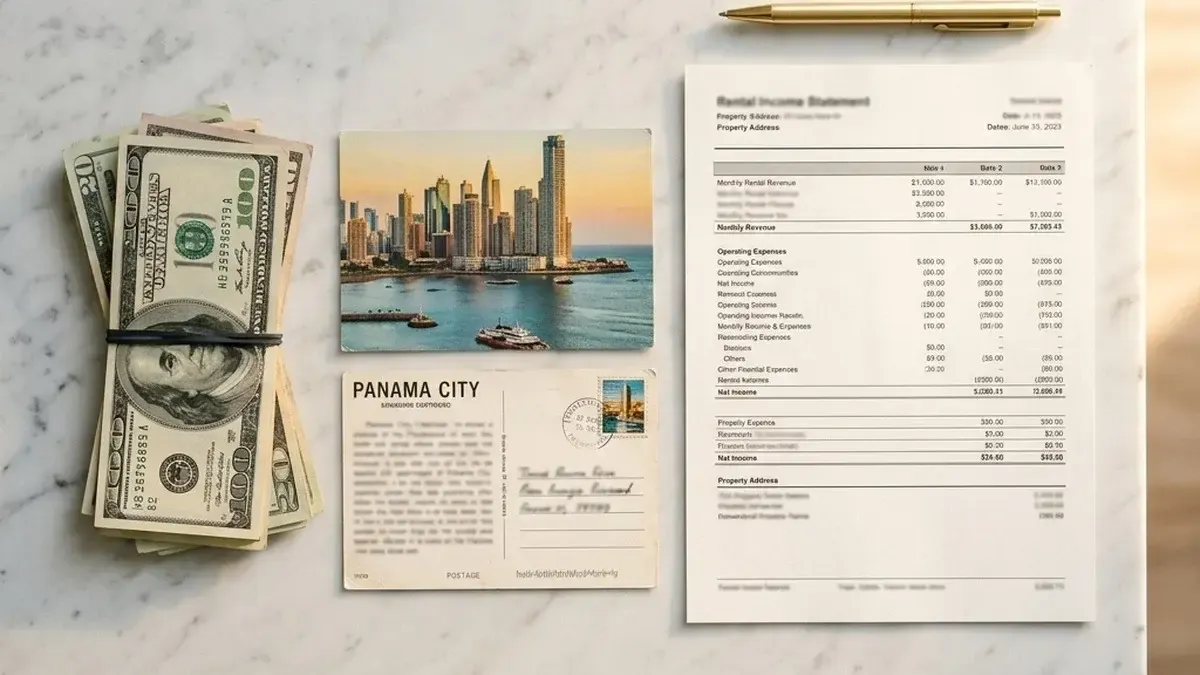
The contrast with other LatAm markets is not subtle. It is the difference between a structural guarantee and a bet on government behavior.
Argentina: annual inflation exceeded 200% in 2022–2023, and the Argentine peso has been devalued repeatedly. Properties denominated in pesos generated nominal rental income that lost real USD value month by month. Investors who held Argentine real estate through multiple devaluation cycles saw local-currency yields evaporate into dollar terms. While Argentina has made reform progress, PIIE’s 2026 analysis [4] notes its monetary framework remains fragile and vulnerable to renewed volatility.
Mexico: the Mexican peso dropped significantly against the dollar across 2020–2024. The IMF revised Mexico’s 2025 growth forecast to a contraction of 0.3%, per Morgan Stanley’s Latin America 2026 outlook [5]. A rental yield earned in pesos, therefore, requires favorable exchange rate timing to land in USD at its face value.
Colombia: the Colombian peso lost over 30% against the dollar from 2019 to 2023. A gross yield of 7% in pesos produced a meaningfully lower return in USD terms over that period. J.P. Morgan’s 2026 Latin America outlook [6] frames the regional picture as “between promise and pressure.” Currency and regulatory risk remain real variables in most LatAm markets.
Panama: GDP expanded 5.2% in Q1 2025, and the dollar is the constitutional currency. Rental income and resale proceeds are in the same currency as the investor’s home country (for US/Canadian buyers) or a single stable reserve currency (for European and global buyers). There is no hedge needed, since there is nothing to hedge against.
What Panama Dollarized Economy Real Estate Investment Means for Your Yield Calculation
The practical impact of dollarization on investment math is often underestimated, because most yield comparisons are made in the local currency of each market, which makes them look comparable on paper.
A 7% gross yield in Colombian pesos is not the same as a 7% gross yield in US dollars. If the peso loses 8% against the dollar in that year, the dollar-equivalent yield on the Colombian investment is negative in real terms, before expenses. The Panama yield of 7% gross, however, is 7% in USD — no adjustment required.
This is the calculation most LatAm investment comparison articles skip. They compare headline yields across markets without accounting for the currency layer. Panama’s yields — 5–10% gross depending on neighborhood — are earned and repatriated in the same currency; what you model is what you receive, per TheLatinvestor’s Panama City market analysis [7].
Panama also operates a territorial tax system: income earned outside Panama is not taxed by the Panamanian government. Combined with USD denomination, this creates a clean investment profile for offshore buyers — dollar returns, no FX conversion loss, and no Panamanian tax drag on income sourced elsewhere.
Frequently Asked Questions
Does Panama actually use the US dollar, or is it just accepted alongside the local currency?
The US dollar is the only circulating paper currency in Panama. Panama has its own unit of account, the Balboa, but the Panamanian Constitution prohibits the issuance of paper Balboa notes. Coins exist in Balboa denominations and are used for small transactions, but all paper money in Panama is US dollars. The dollar has been Panama’s practical currency since 1904, per Arosemena Noriega & Contreras [1]. There is no mechanism to reverse this without constitutional reform.
Can the Panamanian government change the currency or devalue the Balboa?
No. The constitutional prohibition on paper Balboa notes means Panama cannot introduce a parallel local currency or devalue against the dollar through a policy decision. Panama also has no central bank, which eliminates the monetary policy tools that other governments use to inflate or devalue. Reversing dollarization would require a constitutional amendment — a multi-year process with no political support currently, per DoPanama’s currency guide [3].
How does Panama’s dollarization compare to countries that just peg their currency to the dollar?
In fact, a currency peg is a policy decision; it can be abandoned if economic conditions make maintaining the peg too costly. Panama’s dollarization, however, is not a peg. It is the replacement of local paper currency with USD. There is no exchange rate between the Balboa and the dollar, because they are effectively the same thing. Countries like Argentina have historically abandoned pegs under pressure; Panama’s structure makes that path unavailable by design.
Does Panama’s use of the dollar mean interest rates are the same as in the US?
In fact, Panamanian bank mortgage rates are influenced by US dollar interest rate conditions but are not identical to US Federal Reserve policy rates. In 2026, foreign buyer mortgage rates in Panama typically run 6.5–8.5%, somewhat above US domestic rates, reflecting the risk premium lenders apply to cross-border transactions. However, the key point for investors is that there is no currency conversion risk in the financing. Loans are denominated in USD, interest is paid in USD, and the collateral — the property — is valued in USD.
If I earn rental income in Panama, do I pay Panamanian taxes on it?
In summary, Panama taxes income earned within Panama (including rental income from Panama-based properties) under its territorial tax system. Non-resident property owners pay a flat 15% withholding tax on gross rental income, or may elect to be taxed on net income. Income you earn outside Panama, in contrast, is not subject to Panamanian tax. This is a clean structure for offshore investors. Your Panama rental income is taxed in Panama at a known rate, your home-country income is not subject to Panamanian tax, and currency conversion is not a variable at any point in the income cycle. Always confirm your home-country tax treatment with a qualified tax advisor, since Panama’s territorial system does not affect your home-country filing obligations.
Talk to an ICON Agent About Current Listings
Currency risk is not a line item most investors budget for, until they do. Panama’s dollarized structure removes it from the calculation entirely: the yield you model before you buy is the yield that arrives in your account, in US dollars, without conversion.
ICON works across Panama City’s top-performing neighborhoods. We model net yield in USD from day one — including HOA, management, and property tax — so the number you evaluate is what you actually receive.
Talk to an ICON Advisor About Current Listings →
Sources
- Arosemena Noriega & Contreras — dollarization: Panama’s unusual currency journey
- Limitless Legal — advantages of investing in a dollarized economy
- DoPanama — Panama’s economy and currency system
- PIIE — Argentina’s fragile monetary framework, 2026
- Morgan Stanley — Latin America economic outlook 2026
- J.P. Morgan Private Bank — Latin America 2026 outlook
- TheLatinvestor — Panama City real estate market 2026
 Estamos para ayudarte!
