
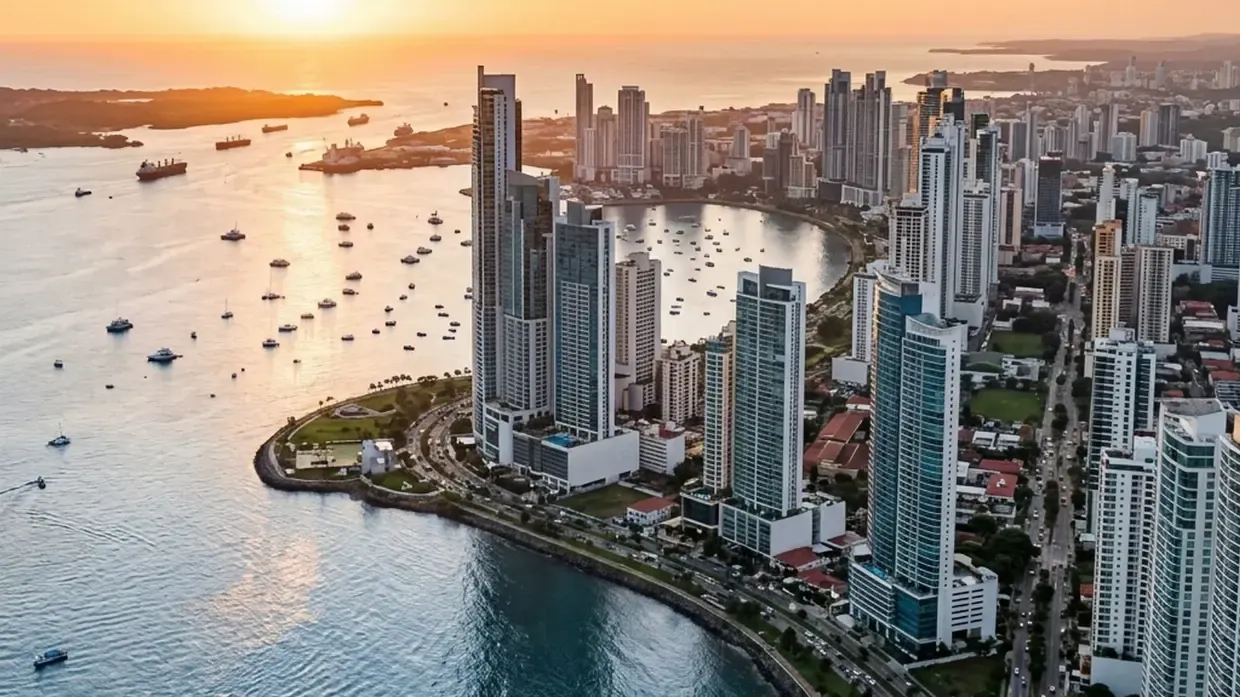
TLDR: Yes, foreigners can buy property in Panama with full legal rights — same as citizens. Panama’s Law 54 of 1998 guarantees it. The only thing that matters: verify the property carries a registered title deed (escritura pública) before you sign anything. Right of possession is a different instrument with fewer protections. No Panamanian partner required. No government approval.
Can foreigners actually own property in Panama, or will you discover later that you can only lease it? That is a fair question, and several Latin American countries do restrict foreign land ownership or complicate it with mandatory local partners. However, Panama is not one of those countries.
In fact, Panama’s foreign investment law gives non-citizens the right to purchase and hold titled property with the same legal standing as Panamanian citizens. The title registers in your name in the Public Registry, and you can sell it, mortgage it, pass it to your heirs, or put it into a rental program. No government approval, no middleman, and no expiration.
In summary, foreigners can buy property in Panama and own it outright. Panama’s Law 54 of 1998 guarantees foreign investors the same legal rights as domestic investors, including full title-deed ownership of real estate. For example, the single most important thing to verify before any purchase is that the property carries a registered title — not a right of possession, which is a separate legal instrument with significantly more risk for an offshore buyer.
What Foreign Investors Need to Know About Property Ownership in Panama
Panama made a deliberate policy choice in 1998. Under Law 54 of 1998, international investors have the same legal standing as Panamanian nationals when buying real estate. There are no foreign ownership caps, no government approval process, and no local partner requirement. You buy it, and you own it.
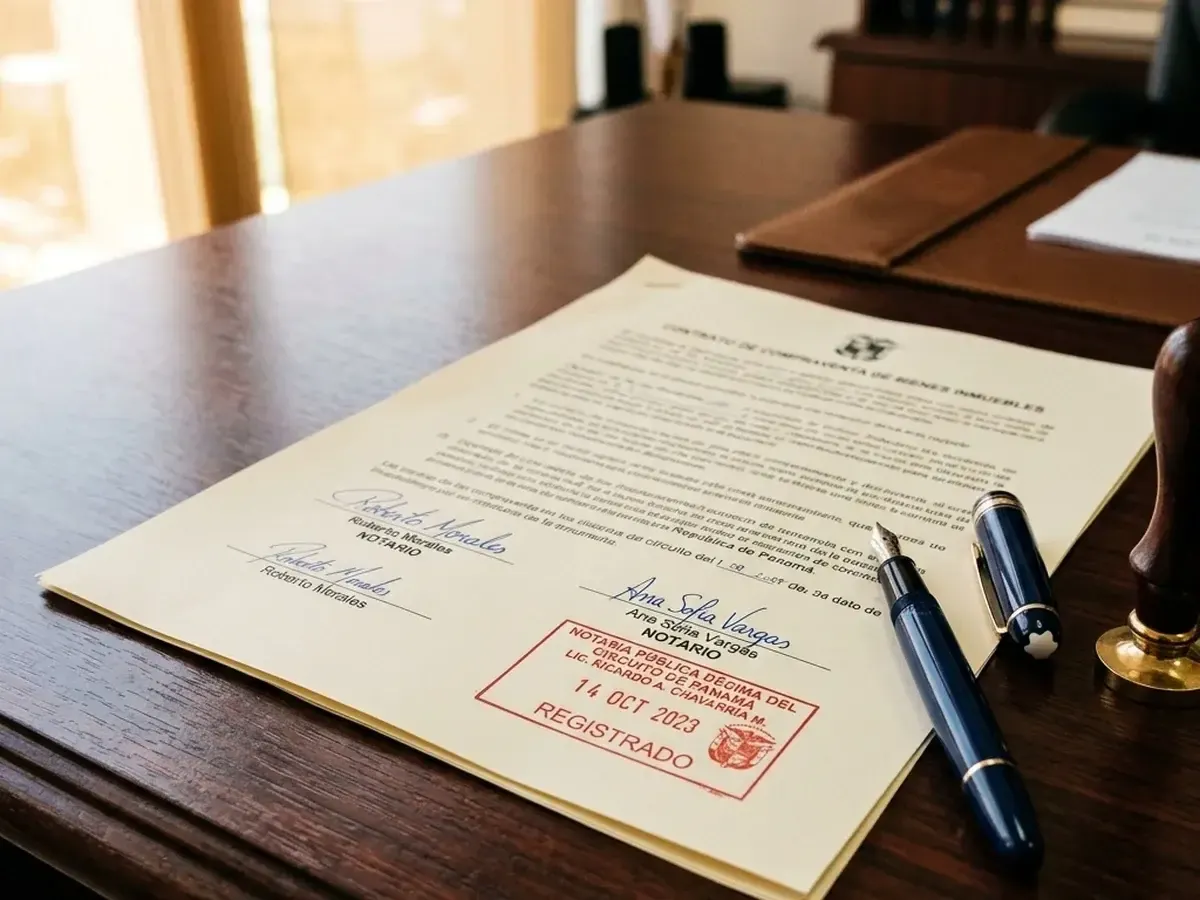
Specifically, the title deed — called an escritura pública — registers in Panama’s Public Registry (Registro Público de Panamá), a centralized government database recording every titled transaction in the country. Once registered, ownership becomes public record, and any attorney can verify title status, check for liens, and confirm the full ownership history in hours. Therefore, that transparency is what makes Panama genuinely accessible to offshore buyers compared to markets where title verification depends on a single notary or an informal paperwork trail.
The Distinction That Protects Your Money: Title Deed Versus Right of Possession
Not all property in Panama has a registered title. Some land — rural areas, certain islands, regions that have not gone through formal government titling — is held under a right of possession (Derecho Posesorio), which is a completely different instrument.
More precisely, right of possession means the current occupant has established use of the land over time, but the state has not issued a deed. Nothing exists in the Public Registry, and as a result, that matters in three specific ways: the land cannot be mortgaged through a Panamanian bank, it is harder to sell to buyers who need financing, and if the government initiates a formal titling process in that area, the outcome for the current occupant is not guaranteed.
You are unlikely to run into this issue for urban residential properties, high-rise apartments, and established developments in Panama City. Urban metro properties are titled. Meanwhile, for coastal parcels, rural land, or newer developments in areas that opened to construction recently, have your attorney pull the Registro Público certificate before any offer — it takes less than a business day.
The Ownership Restrictions That Actually Apply
Panama does have foreign ownership restrictions, but they are narrower than most investors expect. Foreign nationals cannot own agricultural land within 10 kilometers of international borders, or agricultural land within two nautical miles of the Pacific or Caribbean coastline — agricultural only, not residential or commercial.
In contrast, urban apartments, pre-construction condominiums, commercial spaces, marina developments, and resort properties face no foreign ownership restrictions whatsoever.
What the Market Data Shows
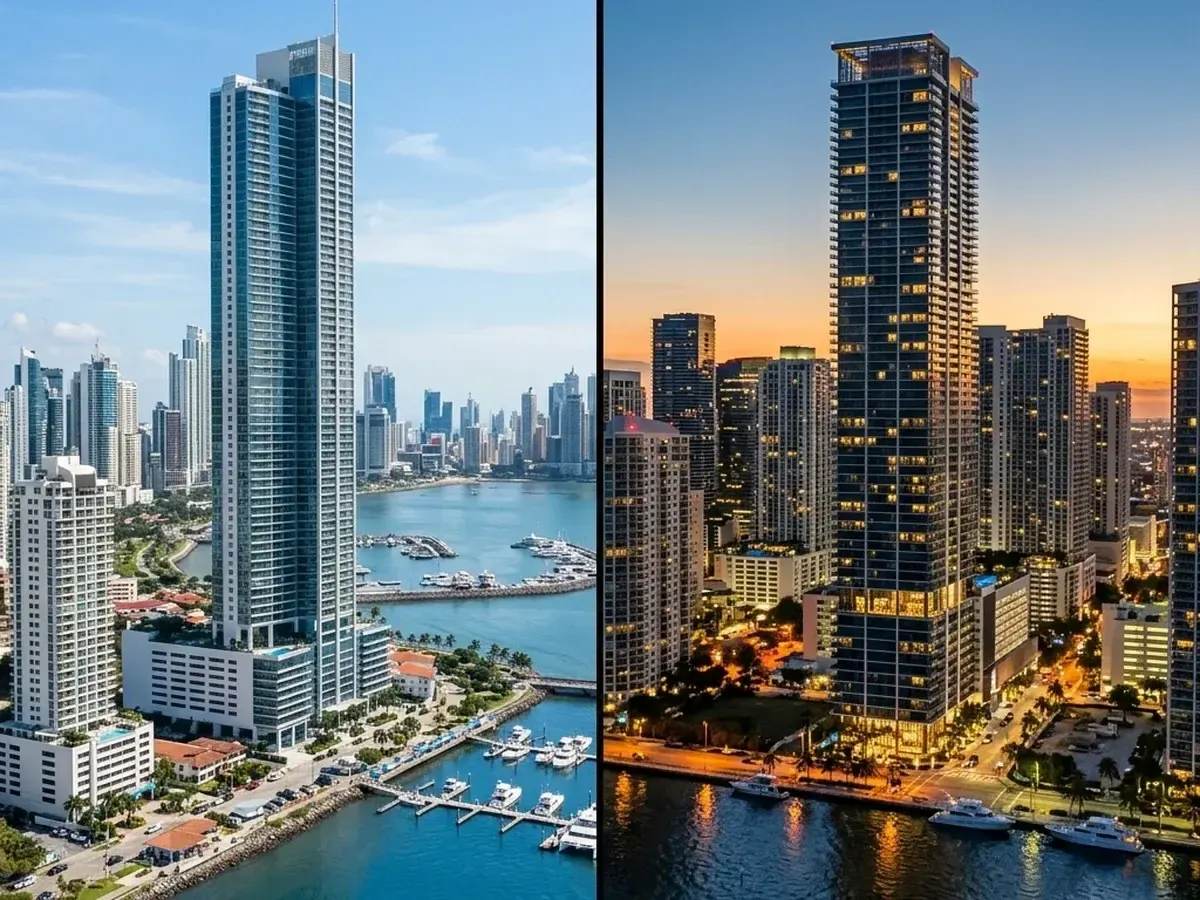
Panama has attracted serious international capital for over a decade, and the 2026 numbers reflect a market under real supply pressure. According to Global Property Guide, net rental yields in Panama City run 5 to 8 percent, while in Miami — the natural comparison for most North American investors — net yields run 2 to 4 percent. Moreover, Panama uses the US dollar, which eliminates currency risk entirely for American and Canadian buyers.
Furthermore, Panama Home Realty reports inventory at a nine-year low, with rents rising 8 to 15 percent year over year in the highest-demand neighborhoods, and TheLatinvestor tracked a 12 percent increase in US investor inquiries to Panama in Q1 2026. Consequently, the yield gap with Miami is not a sales pitch — it reflects 25 years of stable legal infrastructure and supply that has not caught up to demand.
How Foreign Property Ownership Works in Panama: Step by Step
The process from offer to registered title typically runs 45 to 60 days, and each stage has a defined purpose.
Title verification — Before any offer, your attorney requests the Registro Público certificate for the property. This lists the current owner, all registered liens and mortgages, and the exact parcel dimensions. Clean title means you proceed; encumbrances mean you know before you are committed. ICON GROUP pulls this document before any offer goes in, so you see the title status before money enters the picture.
Purchase promise agreement — Once title is confirmed clean, buyer and seller execute a Promesa de Compraventa. This sets the agreed price, payment schedule, and closing date. Notarized and registered with a 10 percent deposit, both parties are legally bound from this point.
Due diligence — Spanning 30 to 45 days, your attorney reviews the full title history, confirms no unpaid taxes, and checks zoning and structural issues. Pre-construction purchases also require review of the developer’s permits and financial guarantees. Problems surface here, not at closing.
Final deed and registration — The notary executes the escritura pública at closing. Both parties sign, and the deed processes through the Public Registry within 5 to 10 business days. The title is then in your name.
Ongoing ownership — Panama’s property tax is low. Primary residences under $120,000 pay nothing, and investment properties in the $200,000 to $500,000 range typically pay 0.5 to 0.7 percent annually. Additionally, there is no capital gains tax on individual real property transfers in most structures — confirm with your attorney. You can sell, rent, mortgage, or pass the property to heirs without government approval.
What ICON GROUP Handles
ICON GROUP manages the property search, coordinates due diligence, works with your attorney on title review, schedules the notary, and handles rental management after closing if you want it. You provide identification, proof of funds, and a signature at each key stage. For instance, if you are buying from outside Panama, the entire process runs remotely and the final deed can be executed via power of attorney.
What Foreign Ownership in Panama Actually Looks Like
A client from Dallas contacted ICON GROUP in late 2024. He had been watching Panama for two years and kept circling the same question: “What if the ownership isn’t real? What if I can’t sell it in five years?”
His attorney pulled the Registro Público certificate within 48 hours. The property — a two-bedroom in Punta Pacifica — was titled clean, with no liens, no encumbrances, and full ownership registered to the developer.
He signed the promise agreement, completed due diligence in 32 days, and closed 12 days after that. Title registered in his name on day 49.
Subsequently, he put the property into ICON GROUP’s rental program. By month three it was generating a net yield of 6.8 percent, and he owns it the same way he would own property in Texas — registered title, right to sell, no restrictions on the buyer.
| Panama City (Punta Pacifica) | Miami (Brickell) | |
|---|---|---|
| Purchase price | $340,000 | $340,000 |
| Net annual rental yield | 6.5–7.5% | 2.5–3.5% |
| Currency risk | None — US dollar | None |
| Annual property tax (est.) | ~$1,700 (0.5%) | ~$5,100 (1.5%) |
| Foreign ownership rights | Full fee simple title | Full fee simple title |
| Closing timeline | 45–60 days | 30–45 days |
Frequently Asked Questions
Can a Foreigner Own 100 Percent of a Property in Panama?
Yes. Foreign nationals can hold 100 percent ownership of titled residential and commercial property in Panama. There is no requirement for a Panamanian co-owner or local partner for standard real estate purchases. Panama’s Law 54 of 1998 gives foreign investors the same legal rights as domestic investors, including full and sole ownership.
What Is the Difference Between a Title Deed and Right of Possession in Panama?
A title deed (escritura pública) is registered in Panama’s Public Registry and grants full legal ownership — it can be mortgaged, sold, and inherited. Right of possession is a claim based on established land use. It is not a registered title, carries fewer legal protections, and cannot be used as bank collateral. For any residential or investment purchase, only proceed with titled property. Your attorney confirms this in due diligence before you are committed.
Do Foreigners Need to Be Residents of Panama to Buy Property?
No. Non-residents can purchase, own, rent, and sell titled property in Panama. Residency is not required at any stage. Many buyers separately apply for Panama’s Qualified Investor Visa (QIV), which grants residency through a $300,000 real estate investment — but that is an optional benefit, not a condition of ownership. The QIV runs parallel to or after the purchase and does not have to come first.
Can Foreigners Get a Mortgage in Panama?
Yes. Panamanian banks lend to foreign buyers, though terms differ from those offered to residents. Non-resident buyers typically face a 30 to 40 percent down payment requirement, compared to 10 to 20 percent for residents. Interest rates run approximately 6 to 8 percent for non-residents. Some developers offer internal financing on pre-construction projects with more flexible structures. All-cash purchases are common, particularly among investors using the transaction to qualify for the QIV.
Are There Types of Property Foreigners Cannot Buy in Panama?
Agricultural land within 10 kilometers of international borders and within two nautical miles of the coastline is restricted for foreign ownership when used for agricultural purposes. This does not apply to residential buildings, commercial developments, condominiums, or tourism properties in those areas. Urban apartments, pre-construction developments, and commercial real estate face no foreign ownership restrictions.
Take the Next Step
The legal foundation for foreign property ownership in Panama is solid and has been tested for over 25 years. However, the risks are real but narrow — substantially smaller than most first-time buyers expect before they look at the actual law.
If you want a clear picture of what buying in Panama looks like for your budget, timeline, and investment goals, speak with an ICON GROUP advisor. We provide current inventory, pricing, and guidance on the full purchase process — from title verification to closing coordination.
Speak with an ICON GROUP Advisor →
 Estamos para ayudarte!