
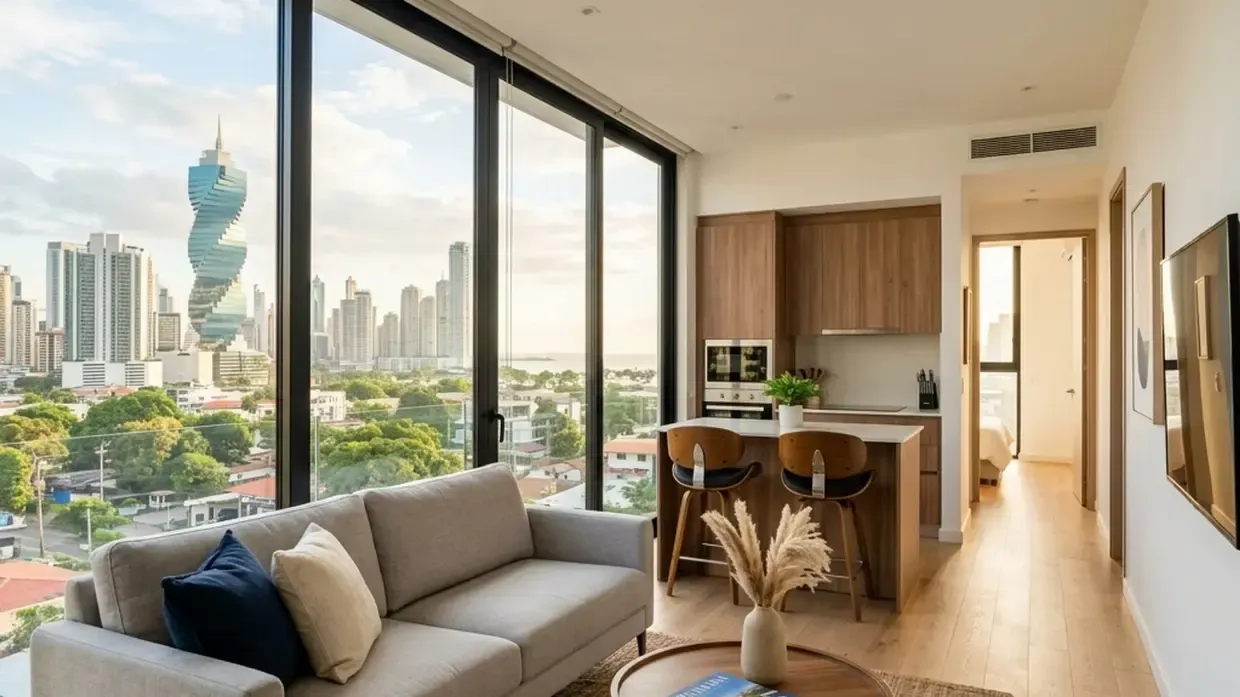
TLDR: Panama real estate ROI averaged a 6.94% gross rental yield in Q2 2026, with El Cangrejo and Punta Pacifica hitting 6–9%. Net yields after costs run approximately 5.2%. Add 3–5% annual price appreciation and total annual returns reach 9–11%. Miami investors earning 2–4% net are, as a result, leaving real money on the table every year they wait.
The numbers in Panama real estate brochures look too good to be real: six percent yield, eight percent, some properties promising double digits. Skepticism is the right reaction here — anyone selling you something should earn your trust, not assume it.
What most Panama real estate ROI content skips is that those yields come from a distribution. Some neighborhoods produce them consistently; others look identical on paper and land two or three points lower once management costs, vacancy, and seasonal patterns are factored in. In other words, the question is not whether the numbers exist, but which properties actually hit them.
Panama’s average gross rental yield was 6.94% in Q2 2026. However, an average this high means some properties are doing better and some are doing worse — what matters is which side of that distribution your money lands on.
In summary, Panama real estate ROI generates average gross rental yields of 6.94% as of Q2 2026, with top-performing neighborhoods delivering 6–9%. Net yields after operating expenses run approximately 5.2% annually. Add 3–5% property price appreciation and total annual returns reach 9–11%. Global Property Guide [1], for example, tracks Miami net yields at only 2–4% — a gap that has held for over a decade.
What Panama Real Estate ROI Actually Looks Like, Neighborhood by Neighborhood
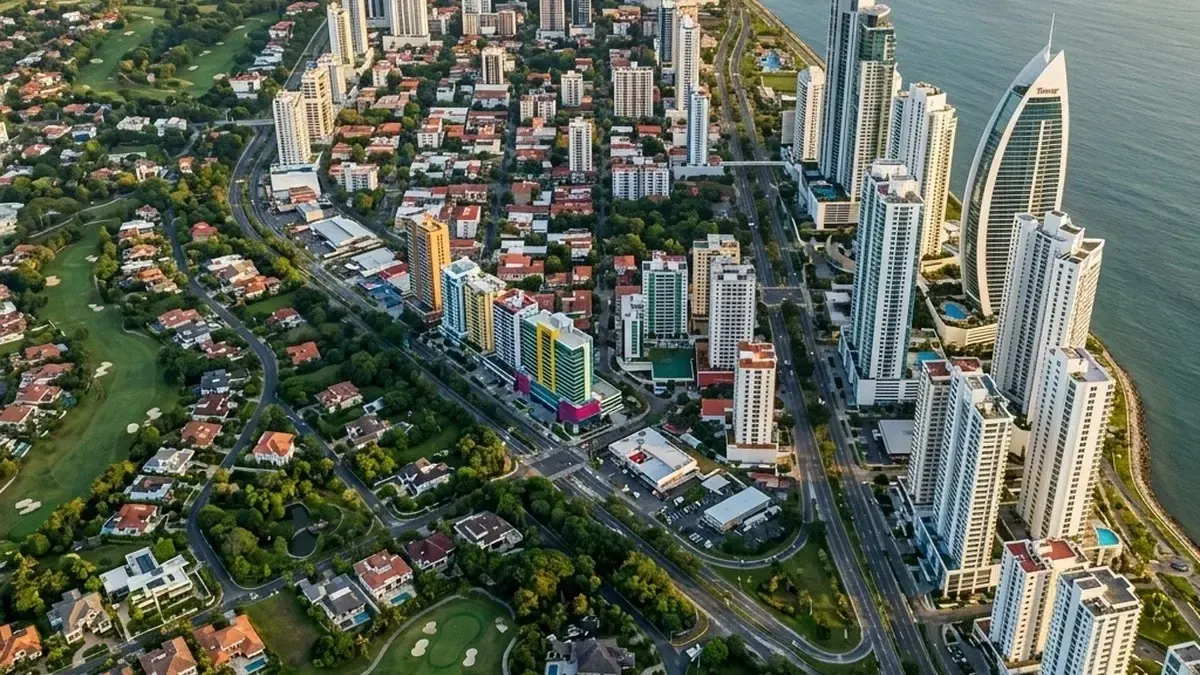
The 6.94% average is a starting point. Where it lands in practice depends on the neighborhood, since Panama City is not one market — it is several distinct investment profiles inside the same metro, and picking the right one comes down to what you are trying to accomplish.
The Neighborhood Breakdown
El Cangrejo has the strongest yield-to-price ratio in the city: 6–9% gross, studio entry prices starting around $90,000. Demand from young professionals, medical staff, and short-term visitors keeps occupancy high, and, as a result, the math works across price tiers because entry prices are lower relative to other neighborhoods.
Does every El Cangrejo property hit 9%? No — older buildings with high maintenance costs, or units that cannot legally operate short-term rentals, land considerably lower. Location sets the ceiling; management quality and property condition determine where within it you land.
Punta Pacifica runs 5–8% gross instead. Tenants are corporate relocations and medical tourism — longer leases, lower vacancy, more predictable cash flow. The trade-off is a higher entry price, which compresses the yield floor. Even so, a $340,000 two-bedroom generating 6.5% net still beats a Miami Brickell equivalent by three to four points annually.
Is the Miami comparison relevant to you? Only if you are choosing between the two markets for the same capital. If you are, the gap is worth knowing before you decide.
Santa María yields 3–5% gross, below the city average — but evaluating it on yield alone misses the point, because it is a capital appreciation market. Properties there have appreciated faster than the Panama City average over the past three years. Yield plus appreciation puts total return in range with El Cangrejo; you are just trading cash flow now for capital gain later.
What the Net Number Looks Like
Gross yield is what the property earns before costs; net yield is what actually reaches your account. Fortunately, Panama’s cost structure is more favorable than most North American markets.
Typical annual deductions:
– Property management: 8–12% of gross rent
– Property tax: $1,000–$2,500 annually for investment properties in the $200,000–$400,000 range
– Maintenance reserve: 1–2% of property value
– Vacancy adjustment: 5–10% depending on neighborhood and rental model
Against Panama’s 6.94% gross average, those deductions produce approximately 5.2% net. Build your financial model on that figure, therefore, not the brochure number.
TheLatinvestor [2] tracks rent growth across Panama City at 8–15% year over year. If that rate moderates to 5–7% and holds for three years, the net yield on a property bought today improves without any change to the asset itself — rent growth does the work.
Total Return: Adding Appreciation
Yield is what the property earns while you hold it; appreciation, meanwhile, is what it earns when you sell.
Panama City property prices grew around 3% in 2025, above local inflation, and, as a result, real purchasing power increased for investors who held. TheLatinvestor’s 2026 price forecasts [3] project five-year cumulative appreciation of 18–25% for Panama City and 14–22% nationally.
A conservative 3% annual appreciation on top of 5.2% net yield puts total annual return at 8.2%. Push appreciation to 4% and you hit 9.2%. At 5%, still within the projected range, total return reaches 10.2%; none of those numbers require Panama to outperform its own history.
In dollars: a $200,000 investment at 5.2% net yield plus 3% appreciation produces $16,400 in year one. Year five produces more. Both the income and the asset have grown.
If you want to understand which specific neighborhoods are producing the strongest returns right now, read our [2026 Panama Investor Neighborhood Guide].
How rental income gets to you: the mechanics behind the number

Knowing what a property yields in theory is step one. Getting that income into your account from 2,000 kilometers away is step two — and step two is where most remote investors discover they had not thought it through.
Panama’s rental market has two models: long-term residential leases and short-term furnished rentals. The model you pick determines both your yield range and your management load.
Long-Term Residential Leases
Typical term: 12 months. Tenant pays utilities, and vacancy is low when the property is priced correctly. Gross yield range: 5–7%.
Income is predictable month to month, and tenant acquisition is a one-time cost per cycle. However, the trade-off is that rent increases happen at renewal, not in response to market movement — in a market where rents are rising 8–15% annually, that lag costs real money.
Short-Term Furnished Rentals
El Cangrejo and Punta Pacifica are where this model works, with a gross yield range of 7–9%.
More gross income means more moving parts: occupancy tracking, cleaning, listing optimization across booking platforms, higher furnishing replacement costs. Can you run this from abroad? Yes — with the right management partner in Panama City.
ICON’s rental program, for example, handles occupancy, guest communication, pricing, maintenance, and accounting from our Panama City office. You get the revenue report and the monthly statement; the cleaning schedule is not your problem.
The Tax Picture for Foreign Investors
What does Panama actually take?
Non-resident investors pay 15% on net rental income from Panama sources. Net income is calculated after deducting management fees, maintenance, depreciation, and property tax, so the effective rate on gross income is below 15%. In addition, there is no withholding tax on rental payments to foreign owners.
Capital gains at sale: 3% of the gross sale price or 10% of net gain, whichever is greater. Your attorney handles the structuring at closing, so it does not surface as a surprise at the end.
One jurisdiction, one annual declaration. Many investors hold through a Panama corporation instead; your attorney walks through the structures during due diligence.
Panama Home Realty’s investment calculator runs a real transaction from purchase price to net annual cash flow — worth running before you speak with anyone.
Panama Real Estate ROI in Practice: A Toronto Investor’s Numbers
A client from Toronto came to ICON in early 2025 with $280,000 to invest. Three markets made her shortlist: Panama City, Lisbon, and Medellín. Her criteria were a net yield above 4.5%, US dollar denomination, and fully remote management.
Lisbon had tightened short-term rental restrictions in the specific neighborhood she wanted. Medellín, meanwhile, showed higher gross yields but in a currency that had lost 18% against the dollar in two years. Panama solved both problems at once: dollar market, no rental restrictions in target neighborhoods, registered title deed, net yields above her floor.
She bought a furnished one-bedroom in El Cangrejo for $107,000, and ICON’s rental program took it from there. First six months: 74% occupancy, $720 average monthly net after management and operating costs. Annualized net yield: 8.1%.
By month nine, the unit had covered her annual tax filing, property management, and maintenance reserve — with cash left over.
Here is how that compares to the markets she passed on:
| El Cangrejo (Panama City) | Lisbon | Medellín | |
|---|---|---|---|
| Purchase price | $107,000 | $107,000 | $107,000 |
| Net annual yield | 8.1% | 3.2% | 7.4% |
| Currency | USD | EUR | COP |
| Currency risk | None | Moderate | High |
| Short-term rental restrictions | None | Restricted (target area) | None |
| Annual net cash flow (est.) | ~$8,667 | ~$3,424 | ~$7,918 (pre-currency adjustment) |
The Panama advantage, in other words, is not just the yield number — it is yield combined with a dollar-denominated market, clean title deed ownership, and remote management that actually works. Take any one of those off the table and the comparison tightens; with all four in place, it is not close.
For capital in the $200,000–$400,000 range, meanwhile, the same framework applies across Punta Pacifica and Costa del Este. The yield floor is slightly lower than El Cangrejo; however, the tenant base is more stable and the appreciation profile is stronger.
If your situation matches what you are reading here, [speak with an ICON advisor about current inventory and what the numbers look like at your price point].
Frequently Asked Questions
What is the average rental yield in Panama City in 2026?
Global Property Guide [1] tracks Panama City’s average gross rental yield at 6.94% in Q2 2026. Net yields after operating costs run approximately 5.2%. Top neighborhoods — El Cangrejo and Punta Pacifica — reach 6–9% gross on furnished short-term rental properties, since neighborhood selection and management quality drive most of the variance between the average and the upper range.
How much can a foreigner earn from renting property in Panama?
A foreign investor with a furnished one-bedroom in a high-demand Panama City neighborhood can generate $600–$900 per month net after management fees and operating costs. Annual net yield depends on property type, neighborhood, and rental model, ranging from roughly 5% on long-term leases in established neighborhoods to 8–9% on short-term furnished units in El Cangrejo. Long-term leases offer lower but predictable income, while short-term rentals generate more with more active management.
How does Panama real estate ROI compare to US or European markets?
Panama’s net rental yields of 5–7% outperform most comparable markets. Global Property Guide [1] tracks Miami net yields at 2–4%, Lisbon at 3–4%, and Barcelona at 3–5%. Panama uses the US dollar, which eliminates currency risk for American and Canadian buyers, and low annual property tax plus no capital gains tax in most individual transfer structures add to the advantage.
Does Panama real estate appreciate in value?
Panama City property prices grew approximately 3% in 2025, above local inflation. Five-year cumulative appreciation is projected at 18–25% for Panama City per TheLatinvestor [3]. Rent increases of 8–15% year over year, per Panama Home Realty, signal demand outpacing supply, which in turn supports continued price growth in constrained neighborhoods.
What taxes do foreigners pay on rental income in Panama?
Non-resident investors pay a flat 15% on net rental income from Panama sources. Net income is calculated after deducting management fees, maintenance, depreciation, and property tax, making the effective rate on gross income lower than 15%. Capital gains at sale are taxed at 3% of the gross sale price or 10% of net gain, whichever is greater. A Panama-registered attorney handles the annual filing and sale structuring, and there is no withholding tax on rental payments to foreign owners.
Take the Next Step
Panama real estate ROI in 2026 is well-documented and well-sourced: average gross yields of 6.94%, net yields of 5.2%, total annual returns of 9–11% including appreciation. These are not promotional numbers — they come from Global Property Guide, TheLatinvestor, and Panama Home Realty’s transaction data.
The real question is whether the numbers fit your timeline, capital size, and risk tolerance. That requires a conversation, not a brochure.
Download our free 2026 Panama Investor Guide. It covers yield data by neighborhood, a full cost breakdown for foreign buyers, current inventory conditions, and the questions to ask before committing capital to any market.
Download the 2026 Panama Investor Guide →
Sources
- Global Property Guide — Panama rental yields, Q2 2026
- TheLatinvestor — Panama rental yields and rent growth
- TheLatinvestor — Panama 2026 price forecasts
 Estamos para ayudarte!