
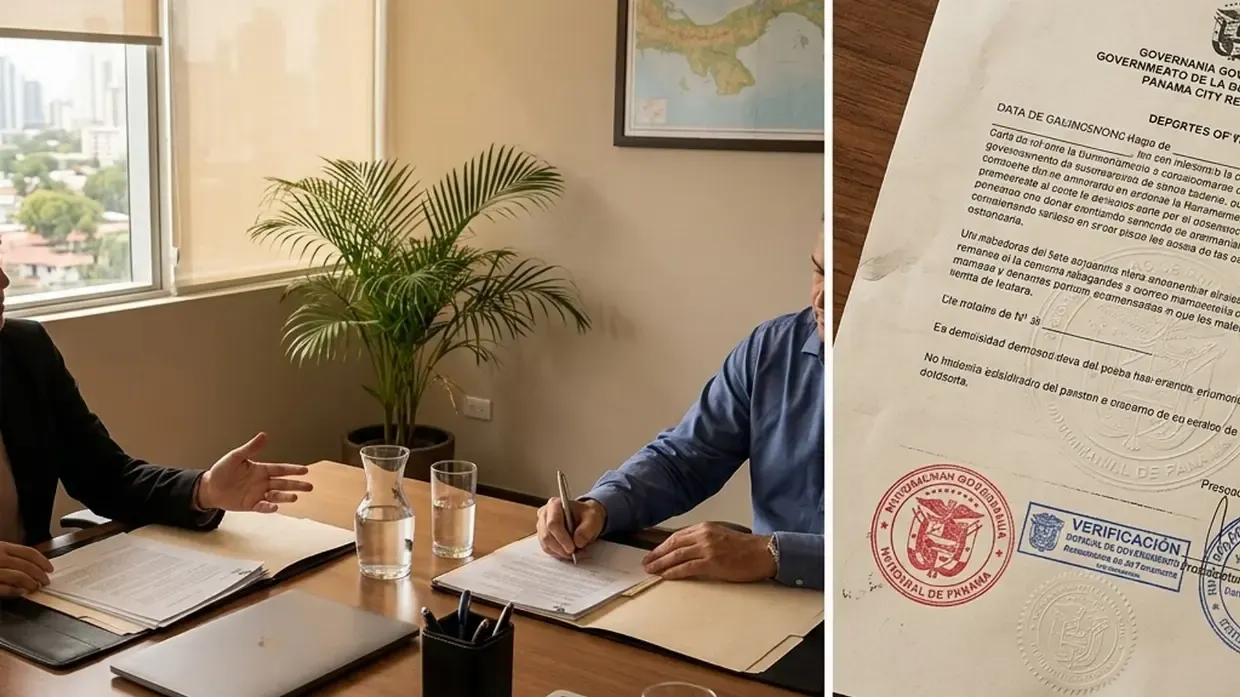
TLDR: Finding a trustworthy real estate agent Panama offshore investors can rely on starts with understanding what the market lacks: no MLS, no mandatory buyer’s agent, and agents who can legally represent both buyer and seller in the same transaction. Commissions run 5–6% of the sale price and are paid by the seller, meaning the agent showing you a property may have a financial incentive to close at the seller’s price, not yours.
Licensing is required under Decree Law No. 6 (1999), but enforcement is inconsistent, and operating without a license is common. Three checks separate the agents worth trusting from the ones who will cost you money: license number, completed deals you can visit, and an independent Panamanian attorney.
A Canadian investor, David, had already wired his deposit before his agent told him the property had a pending mortgage lien. The deal collapsed. The agent kept the commission, and the deposit sat in legal limbo for eight months.
This is not an exceptional story, either. Panama Equity publishes a dedicated warning page for foreign buyers because the pattern is consistent enough to warrant it. Panama Realty Zone’s 2026 risk report goes further, identifying unvetted agents as one of the top three causes of failed or fraudulent foreign real estate transactions.
Panama does not have the buyer-protection infrastructure most North American or European investors assume. There is no MLS, and there is no standardized buyer representation agreement. In fact, an agent can legally represent both sides of the same deal and collect commission from the seller while advising you. The investor who skips due diligence on finding a trustworthy real estate agent Panama actually vets pays for it later.
In short, a trustworthy real estate agent in Panama holds a valid idoneidad license issued by the Junta Técnica de Bienes Raíces (JTBR) under the Ministry of Commerce and Industry. They also have completed deals you can independently verify by visiting finished properties and speaking with past clients, and they operate transparently about which party they represent. Panama’s commission structure — 5–6% paid by the seller — means the agent’s financial incentive is to close the deal, not necessarily to protect your interests. The investor’s protection, therefore, is an independent Panamanian real estate attorney, engaged separately from the agent, whose only obligation is to the buyer. Sources: Kraemer & Kraemer [1], Panama Sovereign Realty, ACOBIR [2].
Finding a Trustworthy Real Estate Agent Panama Investors Can Actually Rely On
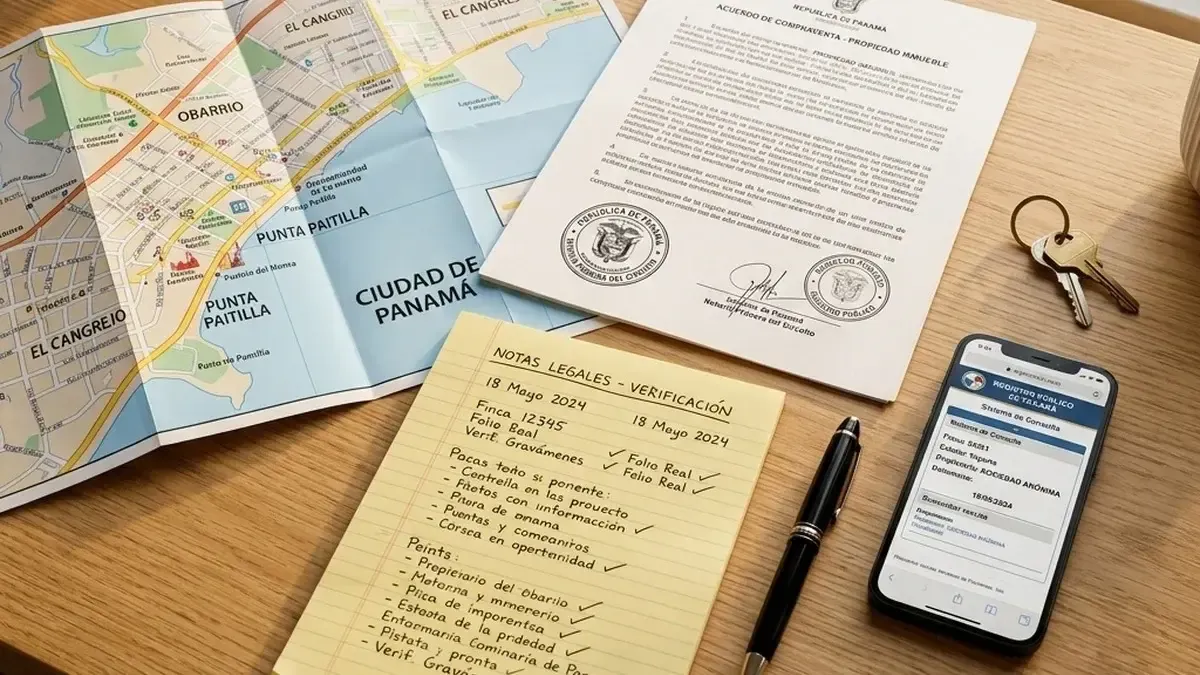
Panama’s real estate industry operates under a framework most offshore investors are not prepared for. Understanding the structure before you engage an agent is the only way to use it to your advantage.
Licensing Exists but Enforcement Is Thin
Decree Law No. 6 of 1999 established mandatory licensing for all real estate brokers operating in Panama. The licensing authority is the Junta Técnica de Bienes Raíces (JTBR), a government body under the Ministry of Commerce and Industry. To obtain a license, agents must complete coursework, pass an exam with a documented initial pass rate around 4%, and post a B/.10,000 bond in favor of MICI, per ACOBIR’s licensing requirements [2].
The reality on the ground, however, is that enforcement is inconsistent. Panama Sovereign Realty documented a government crackdown on unlicensed realtors in a 2024 post, which also confirmed that unlicensed agents were operating widely enough to merit formal government action. A license does not guarantee competence or integrity; its absence, therefore, is a disqualifying red flag.
Dual Agency Is Legal and Common
In Panama, a single agent can legally represent both the buyer and the seller in the same transaction. Commissions of 5–6% are paid by the seller. If more than one agent is involved, the commission splits between them, per Panama Equity’s buyer’s agent guide.
This matters structurally. The agent who showed you the property, who drove you through the neighborhood, who answered your questions about the building, may be collecting commission from the seller and has no legal obligation to tell you. Dual agency is disclosed in better-run agencies but not universally, so ask directly, at the first meeting: “Do you represent the seller, the buyer, or both?”
The Profile of the Investor Most Commonly Burned
According to TheLatinvestor’s 2026 risks and pitfalls guide [3], the buyer most commonly targeted in Panama City is new to the country, emotionally attached to a specific property, in a hurry to close — particularly around visa deadlines like the QIV October 2026 threshold — and reluctant to bring in independent legal help because they trust the agent. Urgency and emotional attachment are the two conditions that make due diligence feel inconvenient; that, however, is exactly when it matters most.
How the Vetting Process Actually Works, Step by Step

The goal is not to find an agent who says the right things. It is to find an agent whose track record can be independently confirmed.
Step 1: Verify the License Before Anything Else
Ask for the agent’s license number and confirm it against the JTBR registry. This takes less than ten minutes. An agent who hesitates or provides a number that does not verify is done; do not proceed. Per Panama Sovereign Realty’s agent selection guide, license verification is the first and non-negotiable filter.
Step 2: Ask for Completed Deals You Can Physically Verify
Not testimonials, and not references who call you back and say nice things. In addition, ask for the addresses of properties the agent has closed in the past two years and visit them. Knock on a neighbor’s door, or ask a building administrator. An experienced agent with a real track record has no reason to resist this request; one who does is telling you something.
Step 3: Understand Who They Represent
Ask directly: “On this transaction, are you representing the seller, me, or both?” If the answer is both, or if they deflect, know that their commission comes from closing the deal at whatever price achieves that outcome. That is not necessarily bad, but it means your attorney, not the agent, is your advocate.
Step 4: Engage an Independent Attorney Separately
The most common costly mistake foreign investors make in Panama is relying on the agent to handle legal verification. Panama’s Registro Público is publicly accessible, and the Registro Público pull — confirming the finca number, title status, liens, and encumbrances — must be done by your attorney before any deposit leaves your account, per Kraemer & Kraemer’s red alerts guide [1].
The attorney’s job is to pull the Registro Público, review the sales promise contract, confirm there are no outstanding condo fees or special assessments, and identify any encumbrances before you commit. Attorney fees for a standard residential transaction run $1,500–$3,000, and that cost is not optional.
Step 5: Confirm the Financial Structure of Any Pre-Construction Project
For example, if the agent is presenting pre-construction, confirm independently how the project is funded — developer capital, a bank construction loan, or buyer deposits. Ask to see evidence the land title is clean and unencumbered before any deposit. Per Panama Sovereign Realty’s developer vetting criteria, reputable agencies decline pre-construction projects that fail these checks. If an agent cannot answer these questions or resists asking them, however, that is the signal.
What This Looks Like When It Works
A US investor relocated from New York spent 72 hours in Panama City on a first visit. She toured eight properties across three neighborhoods with ICON, and she did not make an offer during the visit.
After returning home, she received a Registro Público pull on two properties she was considering, prepared by her attorney, not the agent. One showed an outstanding mortgage lien that had not been disclosed in the listing; the other was clean. She made an offer on the clean property at 7% below asking, citing comparable sales in the building that ICON pulled from its own transaction database. The offer was accepted at 5% below ask, and she closed 44 days later.
The difference between a good agent and a bad one is not personality. It is what the agent pulls before you make an offer and what they tell you when the data is unfavorable.
What ICON Handles on Every Transaction
- Registro Público pull before any offer goes in — title status, lien search, finca verification
- Comparable sales analysis from closed transactions in the same building or corridor
- HOA arrears request directly from the building administrator
- Pre-construction project financial structure review (we decline projects that fail this check)
- Coordination with your Panamanian attorney for contract review and deposit structuring
The agent protects the deal, and the attorney protects you. Both are necessary; neither replaces the other.
Frequently Asked Questions
Do real estate agents in Panama need to be licensed?
Yes. Decree Law No. 6 of 1999 established mandatory licensing for all real estate brokers operating in Panama. The licensing authority is the Junta Técnica de Bienes Raíces (JTBR) under the Ministry of Commerce and Industries. Agents must complete coursework, pass an examination, and post a B/.10,000 bond. In practice, however, enforcement is inconsistent and unlicensed agents operate — a government crackdown on unlicensed realtors was documented as recently as 2024, per Panama Sovereign Realty. Always verify the license number before any engagement.
How do I find a trustworthy real estate agent Panama offshore investors actually recommend?
Start by confirming dual agency status: a single agent may represent both sides of a transaction and collect commission — typically 5–6% of the sale price paid by the seller — from a single deal. This is not automatically disqualifying, but it means your financial interests are not the agent’s primary obligation. Ask directly whether the agent represents you, the seller, or both. An independent Panamanian attorney, whose fee you pay separately, is the buyer’s only true advocate in the transaction.
What are the biggest red flags when choosing a real estate agent in Panama?
Three disqualifying signals: inability or unwillingness to provide a verifiable JTBR license number; pressure to deposit before your attorney has completed a Registro Público title verification; and refusal to name completed deals you can physically verify. A fourth signal worth noting is agents who cannot clearly state which party they represent in the transaction. Per TheLatinvestor’s risk guide [3], the most common scam pattern involves urgency, deposit pressure, and documents that look official but have not been independently verified.
Does Panama have a Multiple Listing Service (MLS) for property?
Panama does not have a national MLS comparable to the US or Canada. ACOBIR (the Panamanian Association of Real Estate Brokers and Developers) operates a listing platform called MLS Acobir, which member agents use to share listings. However, many properties are listed exclusively by individual agencies or sold off-market. This fragmentation means no single agent has access to all available inventory in a given neighborhood, and it means buyers benefit from working with an agency that has deep local transaction history rather than relying on listing aggregators alone.
How much do real estate agent fees cost in Panama?
Real estate agent commissions in Panama run 5–6% of the sale price and are paid by the seller, not the buyer; the buyer does not pay the agent directly. However, buyers carry their own costs. Attorney fees for a standard residential transaction run $1,500–$3,000, and government transfer tax is 2% of the property’s registered value. Legal and notary fees add approximately 1–1.5%, and property registration costs add another 0.5–1%, per Fischer & Cie’s fraud avoidance guide [4]. Total buyer-side closing costs typically run 3–4% of purchase price, separate from the agent commission.
Talk to an ICON Agent About Current Listings
Finding a trustworthy real estate agent Panama offshore investors can rely on matters more here than in most markets, because the protections foreign buyers expect — standardized contracts, mandatory buyer representation, title insurance as a default — are not built into the system. The verification work has to be done explicitly, and it has to be done before any deposit.
ICON pulls the Registro Público certificate before any offer goes in. We model net yield including HOA on every property we present, and we decline pre-construction projects that do not pass our financial structure review. When the data on a property does not favor the buyer, in short, we say so.
Talk to an ICON Advisor About Current Listings →
Sources
- Kraemer & Kraemer — red alerts in Panama real estate transactions
- ACOBIR — membership and licensing requirements
- TheLatinvestor — Panama City risks and pitfalls 2026
- Fischer & Cie — avoiding fraud in Panama’s real estate market
 Estamos para ayudarte!
